Building Resilience While Responding: YCWS’s Work in the Second Quarter of 2026

Building Resilience While Responding: YCWS’s Work in the Second Quarter of 2026

Humanitarian work is often associated with moments of crisis: when disasters strike, displacement occurs, or communities need urgent assistance. Yet much of the work that makes humanitarian action effective happens long before and long after those moments. It involves building partnerships, strengthening local capacity, sustaining essential services, and learning from each experience to better prepare for what comes next. 

Between April and June 2026, YCWS continued this work across refugee protection, disaster risk reduction, emergency response, and partnerships, while laying the groundwork for new initiatives that will carry forward in the months ahead. 

Sustaining Protection, Building Resilience 

On the refugee protection front, YCWS secured continued funding from the United Nations High Commissioner for Refugees (UNHCR) to extend the PURE project through December 2026. The additional support enables YCWS to continue providing protection services for refugees and asylum seekers at a time when humanitarian needs remain significant and funding constraints continue to affect refugee responses globally.  

The extension also reflects a shared commitment between YCWS and UNHCR to ensure that essential support remains accessible for the remainder of the year. 

In disaster risk reduction, June marked the completion of the CLEAR project in Makassar, funded by the Australian Government through Act for Peace Australia. Throughout the project, YCWS and Yayasan INANTA worked with communities to strengthen preparedness through risk assessments, community action plans, contingency planning, anticipatory action protocols, and locally led climate adaptation initiatives. By the end of the project, CLEAR had reached 3,373 direct participants across four urban villages.  

At the same time, the Japan International Cooperation Agency (JICA) funded I-CREATE project, implemented through CWS Japan, entered its second year in Malaka, East Nusa Tenggara, expanding inclusive disaster risk reduction and early warning activities across all 13 target villages. Together, these two programs reflect what YCWS has consistently argued: resilience is not built through single interventions, but through sustained engagement with communities over time. 

New Programming and Emergency Response 

Looking ahead, YCWS secured the BASUDARA project, a new two-year initiative funded by the Australian Government through Act for Peace Australia, beginning July 2026. Implemented in partnership with Yayasan Sagu Salempeng in Ambon and Central Maluku, BASUDARA brings together peacebuilding, disaster risk reduction, and livelihood support within a single program — reflecting the reality that in conflict-affected and disaster-prone communities, these challenges rarely arrive separately. 

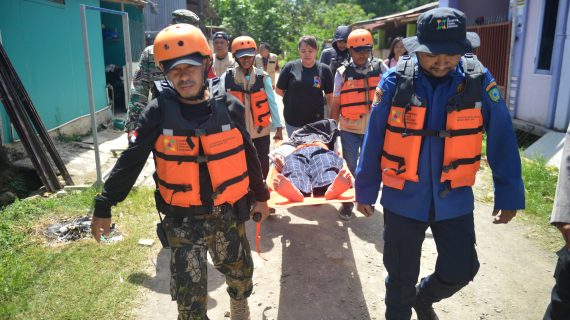
When the earthquake struck Sigi, Central Sulawesi, in June 2026, YCWS and Persekutuan Pelayanan Kristen untuk Kesehatan Indonesia (PELKESI) secured funding through the ACT Rapid Response Fund to support 800 affected households. Under the partnership, YCWS leads the overall response and multi-purpose cash assistance component, while PELKESI provides health and psychosocial support.  

This marks YCWS’s first implementation of an ACT Rapid Response Fund project, providing important firsthand experience with the ACT Humanitarian Mechanism and strengthening YCWS’s capacity to respond to future emergencies through the same framework. 

Strengthening Local Capacity and Sector Engagement 

Partnerships remained central to YCWS’s work throughout the quarter. In collaboration with the Communion of Churches in Indonesia (PGI), YCWS supported the early strengthening of HONAI (Humanitarian Outreach to Need Assistance Initiative), a joint church-led humanitarian platform in Papua supported and facilitated by the Communion of Churches in Indonesia (PGI). HONAI was established to coordinate humanitarian assistance for internally displaced people and communities affected by conflict. During the reporting period, YCWS’s support focused on coordination, institutional development, and preparatory work to strengthen HONAI’s locally led humanitarian response capacity. 

Supporting locally led humanitarian coordination is an important part of strengthening preparedness and response systems. By contributing to institutional development and coordination mechanisms, YCWS is helping lay the foundation for more coordinated humanitarian assistance in Papua. 

Beyond program implementation, YCWS engaged with wider humanitarian and disaster management networks through the ACT Indonesia Forum, JICA Indonesia, AHA Centre regional forums, and local civil society networks, contributing to collective learning and coordination across the sector. 

Looking Ahead 

The second half of 2026 begins with new projects, an active emergency response, and programs entering critical stages of implementation. What the past quarter reinforced is something YCWS has long held to be true: the work that happens between emergencies— the planning, the partnerships, the quiet capacity building—is what determines whether communities are ready when the next one arrives. 

Proyek CLEAR Buktikan Aksi Antisipatif Tingkatkan Kesiapsiagaan Warga Makassar Hadapi Banjir

Proyek CLEAR Buktikan Aksi Antisipatif Tingkatkan Kesiapsiagaan Warga Makassar Hadapi Banjir

Proyek Community-Led Early Action and Resilience (CLEAR) di Makassar menunjukkan bahwa masyarakat dapat mengambil tindakan sebelum banjir terjadi ketika sistem peringatan dini dipadukan dengan aksi antisipatif berbasis komunitas. Temuan ini menjadi pembelajaran penting bagi penguatan manajemen kesiapsiagaan bencana di Indonesia yang masih didominasi pendekatan respons pascabencana. 

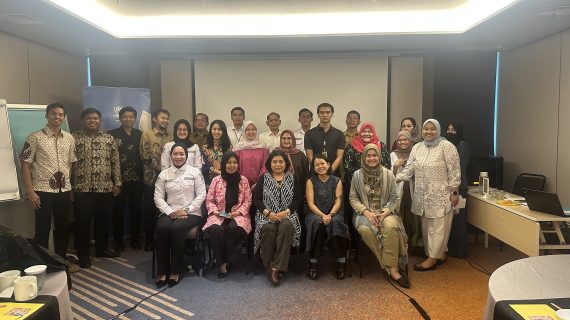
Dalam Lokakarya Pembelajaran Aksi Merespons Peringatan Dini (AMPD) Proyek CLEAR secara daring, Senin (29/6/2026), hasil proyek pengurangan risiko bencana kolaborasi Yayasan Cita Wadah Swadaya dan Yayasan INANTA menunjukkan perubahan perilaku warga yang positif. Alih-alih menunggu air masuk permukiman, masyarakat kini mengamankan dokumen penting, memindahkan aset, menyiapkan perlengkapan darurat, dan membantu evakuasi kelompok rentan begitu peringatan diterima. 

Urgensi pendekatan tersebut semakin besar mengingat banjir masih menjadi bencana yang paling sering terjadi di Indonesia. Berdasarkan data Geoportal Bencana Badan Nasional Penanggulangan Bencana (BNPB), bencana hidrometeorologi mendominasi hampir 60 persen dari lebih 1.100 kejadian bencana yang tercatat secara nasional sepanjang 2026  

Selama ini, masyarakat umumnya baru melakukan evakuasi dan penyelamatan aset setelah banjir terjadi. Akibatnya, bantuan yang datang sering kali terlambat dan tidak optimal dalam memberikan pertolongan ke warga terdampak.  

Program Manager Yayasan Cita Wadah Swadaya (YCWS), Titin Rejeki, menyatakan pelaksanaan Proyek CLEAR sedari awal mengadopsi tiga pendekatan secara terintegrasi, yakni penguatan kapasitas masyarakat, uji coba aksi antisipatif berbasis peringatan dini, dan perluasan akses mata pencarian alternatif bagi warga terdampak banjir.  

Menurutnya, perubahan masyarakat yang lebih siap mengantisipasi bencana ini tidak terjadi secara spontan, melainkan melalui serangkaian intervensi selama tiga tahun. “Kami melihat masyarakat yang dulu hanya menjadi penerima informasi, kini menjadi penggerak utama pengurangan risiko bencana di lingkungannya sendiri,” ujarnya. 

Evaluator eksternal Proyek CLEAR, Hadrianus Edi Handoko, menambahkan bahwa perubahan paling mendasar dari proyek ini bukan pada kualitas sistem peringatan dini, melainkan pada perilaku masyarakat dalam meresponsnya.  

“Peringatan dini tidak cukup dan yang menentukan adalah apakah masyarakat dapat bertindak lebih cepat,” katanya.  

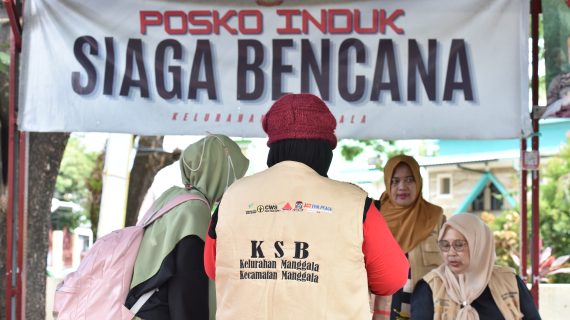
Menurut dia, Tim Kampung Siaga Bencana (KSB) di wilayah kerja Proyek CLEAR telah berkembang menjadi penghubung utama antara informasi teknis dan tindakan warga, melalui penyebaran informasi lewat grup WhatsApp dan pengeras suara, pendampingan evakuasi, serta komunikasi rutin dengan pemerintah kelurahan dan Badan Penanggulangan Bencana Daerah (BPBD). 

Kepercayaan Warga terhadap Komunitas 

Field Officer Yayasan INANTA, Amirullah, yang mendampingi pelaksanaan protokol AMPD di lapangan, mengatakan kunci keberhasilan pendekatan ini adalah kepercayaan warga terhadap Tim KSB sebagai bagian dari komunitas mereka sendiri.  

Tim KSB adalah bagian dari kehidupan sehari-hari masyarakat, sehingga ketika mereka menyampaikan peringatan, warga lebih cepat percaya dan bertindak,” katanya. Ia menilai pembelajaran dari Makassar memberikan dasar yang kuat bagi pengembangan pendekatan serupa di wilayah lain.  

Berdasarkan survei terhadap 318 rumah tangga, serta wawancara mendalam, diskusi kelompok terarah, observasi lapangan, dan telaah dokumen program, terdapat peningkatan akses informasi peringatan dini, kesiapsiagaan rumah tangga, serta penguatan peran Tim KSB sebagai simpul pemantauan risiko dan koordinasi antara warga, pemerintah kelurahan, Dinas Sosial, dan BPBD. 

Perubahan tersebut didukung mekanisme aktivasi yang menggabungkan informasi prakiraan BMKG, peringatan BPBD, pemantauan curah hujan, serta tanda-tanda lokal yang dikenali masyarakat. Ketika indikator tersebut terpenuhi, Tim KSB bersama pemerintah kelurahan mengaktifkan protokol aksi antisipatif sebelum banjir diperkirakan terjadi. 

Selain memperkuat kapasitas masyarakat, Proyek CLEAR juga menghasilkan sejumlah perangkat pendukung yang dapat menjadi rujukan bagi daerah lain, seperti protokol aktivasi, prosedur operasional, mekanisme koordinasi lintas pihak, dan sistem dokumentasi. 

Proyek CLEAR berjalan selama tiga tahun, dari Juli 2023 hingga resmi berakhir pada Juni 2026, di empat kelurahan rawan banjir di Makassar: Katimbang, Paccerakkang, Manggala, dan Tamangapa. Proyek ini diimplementasikan oleh YCWS bersama Yayasan INANTA, dengan dukungan pendanaan dari Act for Peace Australia. 

Selama pelaksanaan, Proyek ini menjangkau 3.109 penerima manfaat langsung dan sekitar 85.452 penerima manfaat tidak langsung di empat kelurahan dampingan. Adapun dari sisi dukungan langsungsebanyak 150 keluarga menerima dukungan dana kesiapsiagaan AMPD, sedangkan 150 pelaku usaha rumah tangga dan kelompok perempuan menerima hibah modal usaha untuk memperkuat mata pencarian alternatif, dilengkapi pelatihan pengembangan usaha. 

Evaluasi Proyek dan Arah Perbaikan Kebijakan 

Meski menunjukkan hasil positif, evaluasi terhadap Proyek CLEAR mencatat area yang masih perlu diperkuat sebelum pendekatan ini direplikasi lebih luas, di antaranya pelembagaan protokol ke dalam sistem pemerintah daerah, mekanisme pembiayaan yang dapat diakses sebelum dampak bencana memburuk, dokumentasi proses aktivasi yang lebih rapi, serta perluasan inklusi bagi kelompok rentan.  

Di tingkat warga, misalnya, sebagian masyarakat dilaporkan masih enggan meninggalkan rumah saat peringatan diterima. Sementara pada saat yang bersamaan terdapat tantangan prakiraan cuaca terkadang belum sepenuhnya sejalan dengan kondisi riil di lapangan, dan ketersediaan alat evakuasi serta tenda pengungsian masih terbatas.  

Secara keseluruhan, pembelajaran dari Makassar menunjukkan bahwa keberhasilan aksi antisipatif tidak hanya bergantung pada akurasi prakiraan cuaca, tetapi juga pada kesiapan masyarakat untuk bertindak sebelum bencana terjadi. Tantangan berikutnya adalah memastikan praktik tersebut dapat diintegrasikan ke dalam sistem penanggulangan bencana di berbagai daerah di Indonesia. 

Sementara itu, pemerintah menyebut temuan Proyek CLEAR sejalan dengan arah kebijakan nasional yang sedang dirumuskan. Asisten Deputi Penanganan Bencana, Kementerian Koordinator Bidang Pembangunan Manusia dan Kebudayaan (Kemenko PMK), Merry Efriana, menyatakan pemerintah tengah menyiapkan dua instrumen regulasi untuk pengarusutamaan AMPD pada periode 2026–2029, yakni Rancangan Peraturan Menko PMK tentang Strategi Nasional Aksi Merespons Peringatan Dini, dan Keputusan Menko PMK tentang Tim Koordinasi lintas Kementerian/Lembaga (K/L).  

Menurutnya, pembelajaran dari Proyek CLEAR, khususnya soal pentingnya protokol bersama, indikator pemicu yang terukur, dan koordinasi multipihak sejak fase perencanaan, menjadi referensi konkret bagi penyusunan kebijakan tersebut. “Keberhasilan aksi merespons peringatan dini ditentukan oleh protokol yang jelas, koordinasi pemangku kepentingan, partisipasi aktif, serta keberanian bertindak sebelum bencana terjadi,” ujarnya. 

Analis Urusan Kemanusiaan UN OCHA, Titi Moektijasih, menambahkan sejumlah kementerian dan lembaga di Indonesia sudah menunjukkan keterbukaan dan kolaborasi yang progresif dalam mendukung aksi antisipatif. Kemenko PMK dikatakan sebagai payung koordinasi lintas sektor yang paling aktif, sementara BMKG dinilai sangat adaptif dalam mengembangkan sistem peringatan dini untuk kebutuhan AMPD, dan BNPB berperan sebagai pengampu utama koordinasi penanggulangan bencana.  

Namun ia mencatat belum semua K/L berada pada tingkat pemahaman yang sama soal efisiensi aksi antisipatif dibandingkan respons pascabencana. Dalam hal ini, Titi menggarisbawahi bahwa Strategi Nasional yang sedang disusun Kemenko PMK, akan menjadi instrumen hukum penting untuk menyelaraskan komitmen antarlembaga agar implementasi AMPD berjalan lebih optimal di berbagai daerah. 

Strengthening Community Resilience Across Indonesia

Strengthening Community Resilience Across Indonesia

Strengthening Community Resilience Across Indonesia,humanitarian response is often measured by what happens during a crisis. But long-term resilience is built long before disasters strike, through preparedness, local leadership, and systems that help communities protect one another.

In the first quarter of 2026, Yayasan Cita Wadah Swadaya (YCWS) continued working alongside communities across Indonesia to strengthen disaster preparedness, support emergency response, and protect vulnerable groups affected by displacement and crisis.
Flood Response in Aceh Utara

When severe flooding hit Aceh Utara, access to affected areas became one of the immediate challenges. As floodwaters began to recede and roads reopened, YCWS, together with local partner Yayasan Geutanyoe, quickly mobilized emergency assistance to communities in need.

In January 2026, 561 households received clean water and water storage support, reaching 2,054 people across affected villages. The response also prioritized persons with disabilities, whose access to emergency assistance is often limited during emergencies.

Clean water remains one of the most urgent needs after flooding, especially when damaged infrastructure increases health risks and disrupts daily life. Through rapid coordination and local partnership, communities were able to receive support during a critical recovery period.

Building Resilience Before Disasters Happen

Alongside emergency response, YCWS continued strengthening community-based disaster risk reduction through the CLEAR and I-CREATE projects in Makassar and Malaka.

In Makassar, the CLEAR project worked closely with Urban Village Disaster Risk Reduction (UVDRR) teams across four kelurahan. A total of 87 team members participated in strengthening community contingency plans, improving evacuation procedures, and refining early warning systems.

Preparedness activities were designed to be practical and locally relevant. Through small grants and community-led initiatives, neighborhoods developed activities such as urban farming and waste management programs that support resilience in everyday life.

In Malaka, East Nusa Tenggara, the I-CREATE project supported the establishment of community-based flood early warning systems across 13 villages. The systems were developed collaboratively with local governments, religious leaders, and community groups to ensure that risk information could reach all residents, especially vulnerable groups.

YCWS also facilitated technical training in rainfall analysis, landslide monitoring, and QGIS mapping, helping local partners strengthen evidence-based disaster risk reduction and improve local decision-making.

Together, these initiatives reflect a broader approach to resilience. Communities are not only recipients of assistance, but active leaders in preparedness and risk reduction.

Supporting Local Humanitarian Responders in Papua

In Papua, where geography, conflict, and limited infrastructure often complicate humanitarian access, faith-based networks continue to play an important role in community response.

YCWS partnered with the Persekutuan Gereja-Gereja di Indonesia (PGI) to facilitate HONAI training for 20 church-based responders from conflict-affected communities. The training focused on humanitarian coordination, protection principles, and community-based response capacities.

The approach was grounded in a simple understanding: people closest to a crisis are often the first to respond, and they need practical tools and systems to do so safely and effectively.

Refugee Protection Through Community Support

During the first quarter of 2026, 441 refugees and asylum seekers accessed support through YCWS programs, with women and girls representing more than half of those reached.

YCWS facilitated 331 outpatient health con

sultations, case management for 37 gender-based violence and child protection cases, and continued access to antiretroviral medication for seven individuals requiring sustained treatment.

Beyond direct services, YCWS also strengthened refugee-led support systems. Sixty refugees served as interpreters, caregivers, peer mentors, and outreach volunteers within their own communities.

This reflects YCWS’s broader approach to humanitarian work: strengthening the capacity of communities to protect dignity, reduce risks, and build safer futures together.


YCWS and UNHCR Strengthen Coordination on Protection of Refugee in Indonesia

YCWS and UNHCR Strengthen Coordination on Protection of Refugee in Indonesia

YCWS and UNHCR Strengthen Coordination on Protection of Refugee in Indonesia

Yayasan Cita Wadah Swadaya, in collaboration with UNHCR, conducted a coordination meeting on the protection of refugee women and girls in Jakarta, Tuesday (9/12/2025). The meeting brought together representatives from the Ministry of Women Empowerment and Child Protection (KemenPPPA), Offices of Women Empowerment and Child Protection (DP3A) and UPTD PPA from the Greater Jakarta area, Komnas Perempuan, the Women and Children Protection Unit (UPPA) of Bogor Regency Police, as well as civil society organizations. 

During the meeting, UNHCR highlighted several key barriers in addressing gender-based violence (GBV) and child protection cases within refugee communities, including: 

  1. Limited and inconsistent involvement of national and sub-national governments, child protection actors, and GBV service providers across different locations; 
  1. The need for clear guidance from KemenPPPA to technical units (DP3A/UPTD PPA) to enable them to handle child protection and/or GBV cases involving refugees. Currently, there is confusion among technical units, with the assumption that such cases should be handled directly by KemenPPPA; and 
  1. An increasing number of refugees in need of legal aid, case accompaniment, cash assistance, and access to safe houses, at a time when humanitarian funding is declining, resulting in reduced support capacity. 

The objectives of the coordination meeting were to: 

  • Strengthen coordination and develop a shared understanding of mechanisms for handling child protection and GBV cases involving refugees in Indonesia; 
  • Identify challenges and service gaps, and formulate next steps to improve access to protection services, including the integration of refugees into the national protection system; and 
  • Encourage a more active and structured role of the government in managing child protection and GBV cases involving refugees, while strengthening the technical capacity of government institutions to deliver comprehensive responses. 

KemenPPPA acknowledged that Indonesia has not ratified the 1951 Refugee Convention and does not yet have a refugee status determination system. Nevertheless, the Government of Indonesia remains committed to providing protection and support to refugees, as reflected in Presidential Regulation No. 125 of 2016, as well as existing national legal frameworks, including the Human Rights Law, the Child Protection Law, and the Law on the Crime of Sexual Violence (TPKS Law). 

KemenPPPA emphasized the importance of cross-ministerial obligations and continued coordination with relevant stakeholders to ensure that children in need of special protection are adequately supported. Women and children were highlighted as the most vulnerable groups in situations of forced displacement and at heightened risk of violence, exploitation, and abuse. 

The fulfilment of refugee children’s rights requires a multisectoral approach involving civil society organizations, as well as central and local governments, to ensure that their basic rights are upheld, that they are protected from violence and exploitation, and that they can access adequate services. These efforts should be aligned with the UN Convention on the Rights of the Child (CRC), ensuring that the best interests of the child remain a primary consideration in all services and interventions for refugee children. 

Partnership in Action: Monitoring Visit in Malaka, East Nusa Tenggara

Partnership in Action: Monitoring Visit in Malaka, East Nusa Tenggara

Building stronger and more resilient communities is rarely the work of a single actor. It requires collaboration, shared learning, and hands-on engagement with the people most affected by climate-related risks. This spirit of partnership was at the heart of YCWS’s monitoring visit to Malaka, East Nusa Tenggara (NTT), held this past week as part of the I-CREATE program funded by JICA. 

The visit brought together Yayasan Cita Wadah Swadaya (YCWS), Church World Service Japan (CWSJ), Japan Conservation Engineers (JCE), and Perkumpulan Masyarakat Penanganan Bencana (PMPB) in a coordinated effort to strengthen local disaster risk reduction capacities. Over several days, the joint team conducted field activities designed to build practical skills while reinforcing the importance of evidence-based planning in flood-prone areas of Malaka. 

Technical Capacity Building for Implementation Partner 

Throughout the monitoring visit, technical specialists from Japan worked closely with the staff from PMPB and YCWS to enhance their practical skills in disaster risk analysis. The focus of the sessions was not on community training, but on equipping project implementers with the tools and confidence needed to independently lead technical components of the I-CREATE program. 

Takeshi Komino from CWS Japan introduced the team to the use of Geographic Information Systems (GIS) for disaster risk mapping. He demonstrated how GIS can both automate and validate the identification of risk spots previously recognized by the team in the field, helping PMPB and YCWS visualize vulnerable areas and prioritize where mitigation measures will have the greatest impact. 

In the field, Mayumi from JCE guided the team using levelling poles to measure flood-prone locations and the creation of terrain cross-sections. These techniques help project staff interpret how water flows across the landscape, identify critical risk points, and design more accurate and context-sensitive mitigation plans. 

The hands-on approach did more than build technical proficiency. It strengthened the capacity of PMPB and YCWS to apply science-based methods on their own—shifting from dependency on external experts to greater ownership of disaster preparedness processes within the project. 

Running alongside the technical sessions, YCWS facilitated a Monitoring, Evaluation, Accountability, and Learning (MEAL) workshop with PMPB. This session reinforced the program’s monitoring systems, documentation standards, and accountability mechanisms, ensuring that evidence and learning from Year 1 are captured effectively to guide Year 2 implementation. 

The MEAL workshop also served as a structured reflection space—allowing teams to identify what worked, what needs adjustment, and how program continuity can be strengthened moving forward. 

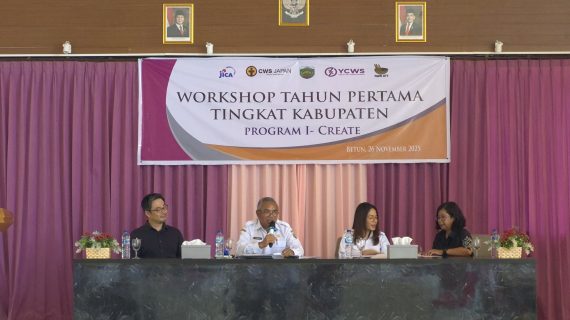
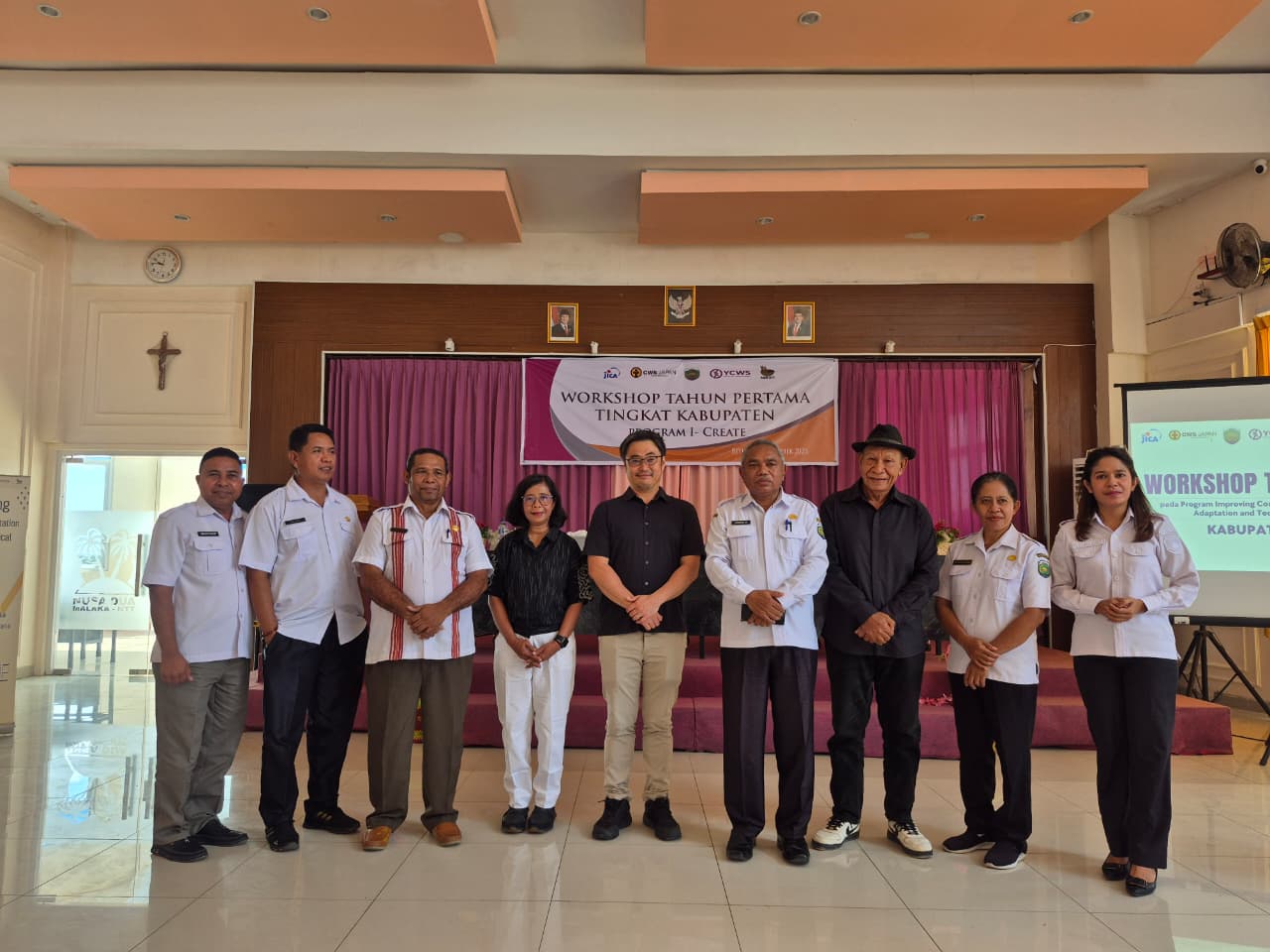
Representatives from local government, YCWS, and CWS Japan gathered for the first-year district-level workshop of the I-CREATE Program in Malaka. Doc/YCWS.

Multi-Stakeholder Collaboration 

The monitoring visit culminated in a project defined “pre-Musrenbang kabupaten”—a consolidation meeting held prior to the formal Musrenbang or district-level development planning consultation workshop—that brought together approximately 80 participants representing local government agencies (OPDs) and community organizations across Malaka Regency. 

Following presentations from the Malaka Planning, Research and Innovation Agency (BAPPERIDA Malaka), PMPB, and CWSJ, participants engaged in focused discussions to align disaster risk reduction priorities with local development planning cycles. This integration is essential for ensuring that community resilience becomes embedded in formal government planning, not treated as a standalone project. 

Key Observations and Outcomes 

Overall, towards the end of Year 1 implementation, I-CREATE project has shown positive results and response from its relevant stakeholders. Initial insight from recent monitoring visit suggest that technical skill transfer is progressing well, particularly in the practical components.   

During the pole measurement and cross-section training, Vinnie, one of PMPB staff, shared that they learned a lot of detailed things through the field practice, not only by theory. She expressed appreciation for the depth of learning and hopes that these skills will later support risk identification and mitigation together with the village FPRB teams.   

Stakeholder engagement throughout Year 1 has also been positively received. The Secretary of Malaka Regency, Ferdinand Un Muti, referred I-CREATE as a “positive collaboration”, encouraging OPDs to apply workshop learnings to strengthen regional disaster preparedness.  

How CLEAR Program Builds Flood-Resilient Communities in Makassar

How CLEAR Program Builds Flood-Resilient Communities in Makassar

In Makassar, South Sulawesi, the impacts of climate change are no longer distant concerns but lived realities. Recurrent flooding continues to disrupt livelihoods, strain public services, and place vulnerable households at risk. 

In late September 2025, something significant took place in four flood-prone urban villages in Makassar: Katimbang, Tamangapa, Paccerakkang, and Manggala. Community members, disaster response agencies, military representatives, and local government officials came together not to respond to an actual flood, but to prepare for one. 

These comprehensive preparedness simulations marked a critical milestone in the Community Led Early Action and Resilience (CLEAR) Program, implemented by Yayasan Cita Wadah Swadaya (YCWS) in partnership with Yayasan INANTA and supported by Act for Peace Australia. 
Launched in July 2023, CLEAR is a three-year initiative targeting communities most exposed to recurrent flooding. With 3,412 direct beneficiaries and approximately 34,245 indirect beneficiaries across four sub-districts, CLEAR goes beyond traditional disaster response.  

It empowers communities to assess their own climate vulnerabilities, implement anticipatory actions before disasters strike, and access alternative livelihoods to reduce displacement risks. 

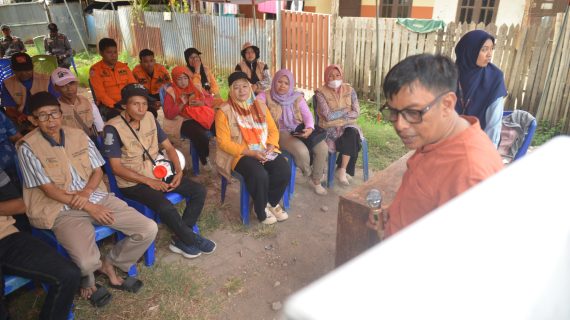
Community members gather in an evacuation center during the CLEAR Program’s flood preparedness simulation. Dok/YCWS.

The Three-Step Flood Simulations 

The flood simulations followed a rigorous methodology proven to strengthen disaster readiness. First, groundwork. This means YCWS teams collaborated with communities and local governments to develop realistic flood scenarios, assign roles, and prepare equipment tailored to local contexts.  

Second, execution. In this extent, participants activated early warning systems, evacuated residents to designated shelters, established emergency response posts, and delivered first aid and logistical support under conditions mirroring real emergencies.  

Finally, evaluation which is refer to together with the Regional Disaster Management Agency (BPBD) and village governments, teams assessed coordination effectiveness, identified gaps, and refined contingency plans to ensure vulnerable members, including persons with disabilities and diverse gender identities, received appropriate assistance. 

Community volunteers join a flood simulation under the YCWS CLEAR program in Makassar. Dok/YCWS.

Tangible Impact 

The results were significant. Communities gained clearer understanding of evacuation routes and self-rescue measures. Meanwhile, coordination between village authorities and technical agencies strengthened significantly.  

Beyond simulations, CLEAR has supported also the establishment and continued strengthening of Kampung Siaga Bencana (KSB) teams across four villages.  

The program has also helped develop key disaster management documents, such as risk assessments, action plans, and contingency plans, aligned with village-level strategies for flood mitigation.  

One of CLEAR’s key innovations is the piloting of Anticipatory Action, including early action protocols and fund-disbursement mechanisms that enable interventions before floods occur. 

YCWS Responds to Humanitarian Crisis After Hydrometeorological Disaster in Sumatra

YCWS Responds to Humanitarian Crisis After Hydrometeorological Disaster in Sumatra

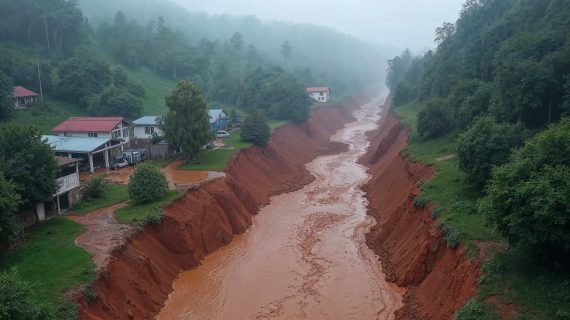
Yayasan Cita Wadah Swadaya (YCWS) is mobilising humanitarian assistance for communities affected by flash floods and landslides across three provinces in Sumatra, triggered by Tropical Cyclone Senyar. The disaster, which evolved from cyclone seed 95B in the Malacca Strait from 21 November, has caused at least 84 deaths and displaced tens of thousands of people.
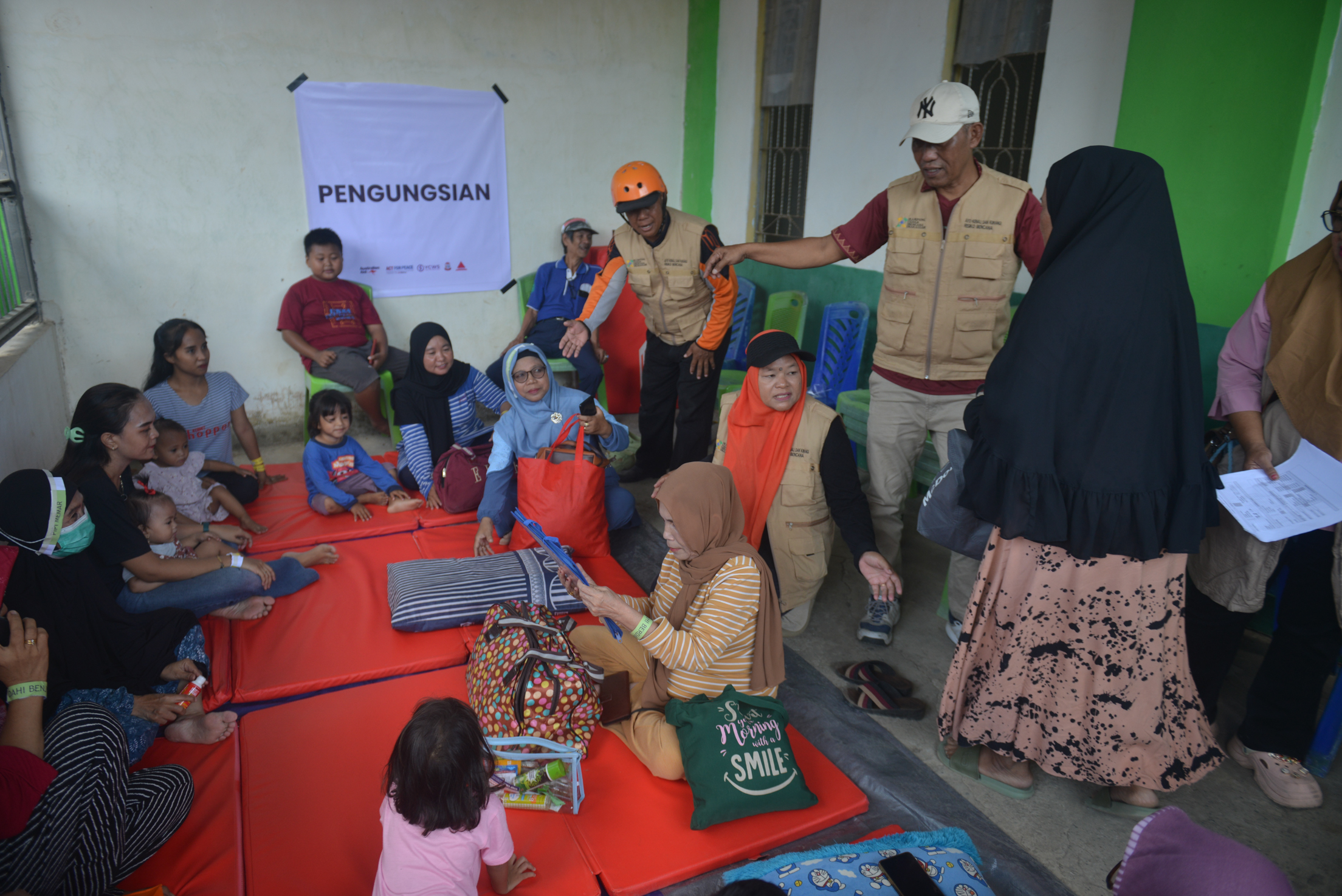
According to the YCWS Situation Report of 27 November 2025, the scale and impact of the prolonged extreme rainfall in Aceh, North Sumatra, and West Sumatra are deeply concerning:

  •  North Sumatra: 47 fatalities; around 3,000 people affected.
  • Aceh: 17,352 households (59,947 people) affected; 3,007 households displaced; 22 fatalities.
  • West Sumatra: 27,433 people affected; 15 fatalities; 4,500 houses damaged.

Beyond the loss of life, critical infrastructure has been severely disrupted. Landslides have cut off road access, electricity has been interrupted, and communication networks have been damaged, leaving some areas completely isolated.

YCWS’s Initial Response

YCWS is responding in Aceh through local partner Yayasan Geutanyoe, providing immediate life-saving assistance to affected families. Together with our partners and networks, we are also conducting a joint needs assessment on the ground to guide further support for communities across Sumatra.

“We will continue coordinating with BPBD, BNPB, and humanitarian networks such as Humanitarian Forum Indonesia and ACT Indonesia Forum,” said YCWS Executive Director Dino Satria.

Urgent Needs

Based on current assessments, immediate priority needs include:

  • Temporary shelter (tents and basic shelter materials)
  • Ready-to-eat food
  • Clean water and water containers
  • Hygiene kits and menstrual hygiene supplies
  • Emergency sanitation facilities
  • Psychosocial support for children, women, and other vulnerable groups

Call to Action

The hydrometeorological disaster in Sumatra is another reminder of the urgent need for preparedness, climate-resilient communities, and stronger cooperation among government, civil society, faith-based groups, and the public.

YCWS invites individuals, congregations, organisations, and private sector partners to take part in this humanitarian mission.

“Every contribution represents hope for those who are now struggling with loss and limited resources.”

For more information or to contribute to this response, please contact YCWS at citawadahswadaya@ycws.org or visit ycws.org.

From Legacy to Local Leadership

From Legacy to Local Leadership

In August 2024, after more than six decades of humanitarian work in Indonesia, Church World Service’s presence transformed into something new: Yayasan Cita Wadah Swadaya (YCWS), an Indonesian, faith-based foundation built on inherited trust and long-standing partnerships.

At YCWS, we did not start from zero. As an Indonesian foundation, we stand on more than sixty years of credibility earned alongside refugees, communities hit by disasters, and villages on the frontline of the climate crisis. That inheritance is now our mandate: we are here to ensure that humanitarian work in Indonesia is led, owned, and sustained by Indonesians themselves.

As a faith-based foundation, we express our faith through action: standing with people in their hardest moments and protecting their dignity. From this commitment flow three interconnected areas of work:

  • Refugee Protection
  • Disaster Preparedness & Response
  • Climate Resilience

In our first year as YCWS, we walked alongside more than 1,350 people across three provinces. At the centre of this work is refugee protection. Our teams provided 430+ health consultations – including HIV services and mental health support – and supported 233 refugees and asylum seekers with safe accommodation and ongoing case management. We also delivered cash assistance to 785 people, helping families cover urgent needs with dignity. For nearly 100 women and girls at risk, this support meant protection, specialised counselling, and concrete pathways toward greater safety and independence.

Beyond refugee protection, we worked with communities not only to respond to crises, but to prepare for them. In Makassar, community-led teams coordinated flood evacuations, ran public kitchens, and worked side by side with city authorities during emergencies. In East Nusa Tenggara, we launched I-CREATE, a three-year initiative to strengthen early warning systems in 13 flood-prone villages. Along the way, 452 residents joined climate awareness sessions and 102 village leaders helped shape local resilience action plans that they themselves will drive forward.

Humanitarian action is changing it must localise and return real power to communities. YCWS is where a long-standing legacy becomes a local mandate.

Nearly One Thousand People Evacuated as YCWS Monitors Mount Semeru Eruption

Nearly One Thousand People Evacuated as YCWS Monitors Mount Semeru Eruption

Yayasan Cita Wadah Swadaya (YCWS) expresses its deep concern over the eruption of Mount Semeru, which has severely affected communities in Lumajang Regency, East Java. According to field reports, approximately 956 residents have evacuated to several designated safe locations, and the number is expected to continue rising as data collection progresses.
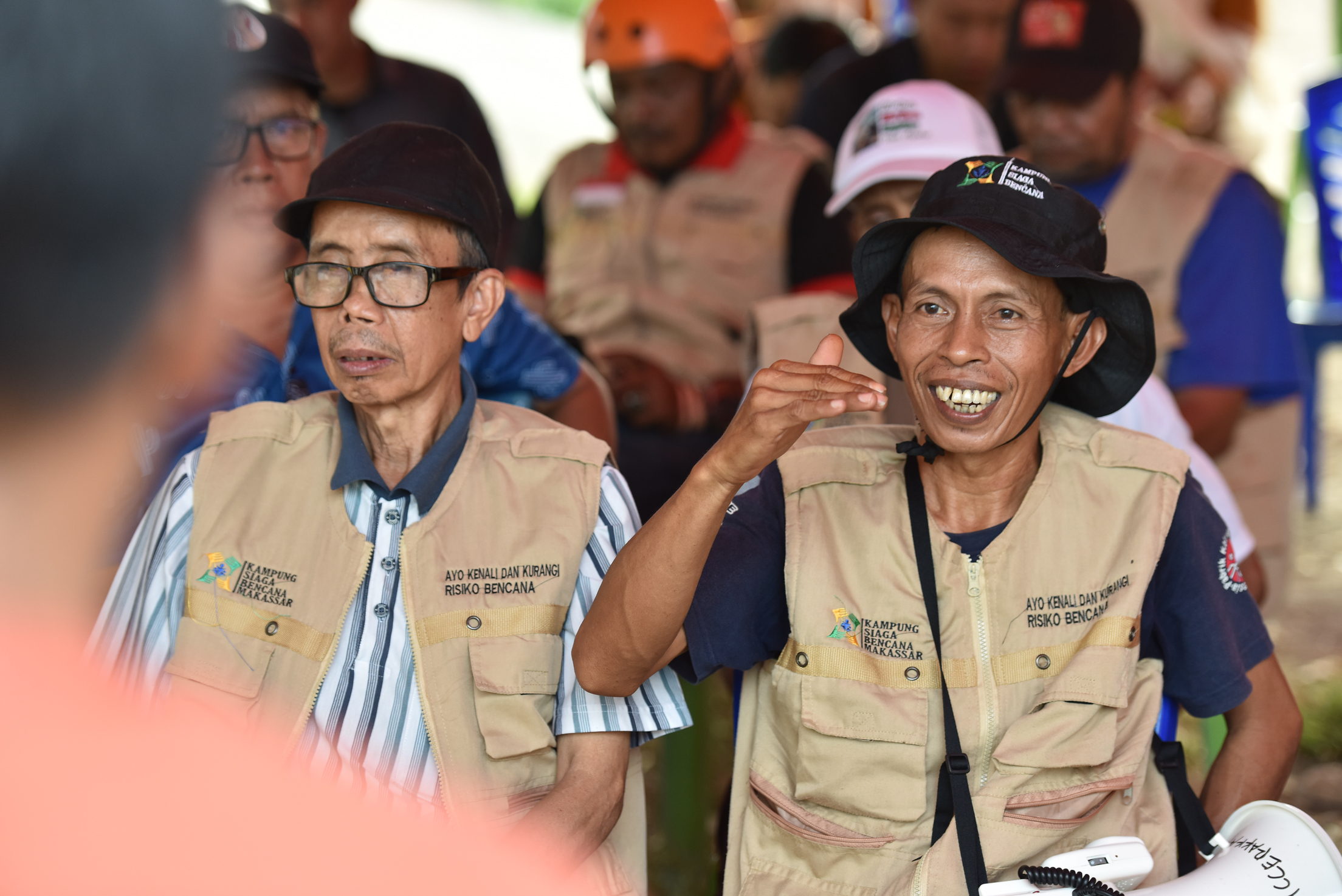
On Wednesday (19 November), Mount Semeru’s volcanic activity escalated sharply. A loud explosion was heard at around 16:00 local time, followed by a towering column of volcanic ash rising to 2,000 meters above the summit. The ash drifted toward the northern and northwestern slopes, blanketing villages surrounding the highest volcano on the island of Java.

Seismic instruments recorded 118 eruption quakes, a pyroclastic flow signal, and 30 avalanche quakes. A sustained tremor with a maximum amplitude of 40 mm lasted for 16 minutes—an indication of a strong eruptive episode.

Within one hour, the Centre for Volcanology and Geological Hazard Mitigation (PVMBG) elevated Semeru’s alert level from Level III (“Siaga”) to Level IV (“Awas”), the highest alert status in Indonesia’s volcano monitoring system.

The National Disaster Management Agency’s (BNPB) Emergency Operations Center (Pusdalops) reported that three villages were among the most affected: Supit Urang and Oro-Oro Ombo in Pronojiwo Sub-district, and Penanggal in Candipuro Sub-district.

Meanwhile, the Lumajang Regency Government has declared a seven-day Emergency Response Status, effective from 19 to 25 November 2025. Authorities have also enforced an exclusion zone of 8 kilometres from the crater to protect residents from potential hazards such as rock ejection and rain-triggered lava flows.

Six evacuation sites have been prepared across Pronojiwo and Candipuro. These include SD 04 Supiturang hosting around 100 evacuees, SD Sumberurip 02 with approximately 200 people, and Masjid Ar-Rahmah which currently accommodates up to 500 residents.

The Regional Disaster Management Agency (BPBD) is leading the ground response, distributing food and non-food assistance while conducting assessments at evacuation centres.

For YCWS, this disaster is not merely a volcanic eruption—it is a chain of impacts that challenges the resilience of families and communities, particularly children, the elderly, and other vulnerable groups.

During this emergency phase, YCWS underscores the importance of rapid and targeted assistance. Immediate needs include masks to protect against volcanic ash, sleeping mats for evacuees in temporary shelters, and ready-to-eat meals for displaced families.

YCWS also reaffirmed its commitment to monitor developments closely and strengthen coordination with humanitarian networks such as the Humanitarian Forum Indonesia (HFI), ACT Indonesia Forum, and other organizations already operating in the field.

Amid the uncertainty, YCWS calls on the broader public to uphold solidarity. “What matters most right now is ensuring people’s safety. We remain committed to supporting ongoing humanitarian efforts in the affected areas,” the YCWS team stated.

As of this writing, Mount Semeru’s volcanic activity continues to be closely monitored, while nearby airports remain operational despite the issuance of an orange VONA (Volcano Observatory Notice for Aviation) alert.

Small Homes, Big Safety: How Community Care Helps Refugee Children Rebuild in Indonesia

Small Homes, Big Safety: How Community Care Helps Refugee Children Rebuild in Indonesia

Across Indonesia’s vast chain of islands, more than 11,700 refugees and asylum seekers are trying to rebuild their lives far from home. Nearly one-third of them are children. Some made the journey alone, while others were separated from their families along the way. Many arrive exhausted, carrying experiences far too heavy for someone their age.

In a country that isn’t part of the 1951 Refugee Convention, their safety depends on a mix of local laws, international support, and organizations that believe every child deserves protection.

At Yayasan Cita Wadah Swadaya (YCWS), that belief guides everything we do. YCWS supports unaccompanied and separated children through the Supported Independent Living Care Arrangement (SILCA). It’s a quietly transformative model, and built not around institutions, but around people.

Through SILCA, children live with trained guardians or foster parents in simple rented homes across Jakarta, South Tangerang, and Bogor. These aren’t large shelters or group centres. They’re small, everyday homes where a child can begin to feel a sense of normal life again. Weekly safety visits, case management, access to school, vocational training, healthcare, and psychosocial support from the program’s foundation.

But often, it’s the small human moments that matter most: a guardian helping with homework in a language neither fully shares, a foster parent showing how to shop at the local market, a case worker listening when an old memory suddenly surfaces. Indonesia faces real protection challenges.

Meanwhile, more than 400 unaccompanied or separated children are registered with UNHCR, and many more are vulnerable due to displacement, long waiting periods, and the emotional toll of uncertainty. Refugees cannot legally work, which strains families and affects children’s stability.

Access to national education remains limited. Only 769 refugee children attend accredited schools out of thousands who qualify. In Aceh and North Sumatra, Rohingya arrivals in recent years have encountered community tension, overcrowded shelters, and rising protection risks.

Amid these challenges, SILCA offers a small but meaningful path to dignity. It helps children grow within a community instead of being pushed to its edges. It allows them to slowly recover the rhythms of childhood—learning, socializing, making mistakes, trying again.

And it strengthens the community around them by involving Indonesian neighbors, refugee volunteers, and local authorities in their daily protection. Rebuilding childhood after displacement is never simple. But each time a child begins to feel truly safe again, something changes. They start to imagine their future.

They begin to dream in ways that once felt impossible. At those moments, YCWS is reminded why this work matters, and why community-based care remains one of the strongest tools we have.

Get in Touch!

Social Media

Join Us

Contact Us

© Copyright Yayasan Cita Wadah Swadaya. All Right Reserved