In Cisarua, Bogor, where thousands of refugees live with prolonged uncertainty, refugee communities have found ways to support one another and meet needs that might otherwise go unmet. Across the hillside neighborhoods of this highland town, refugees have established schools, training centers, sports clubs, and skills programs in response to the needs they see in their own community.
These are the or Refugee-Led Initiatives (RLIs) of Cisarua [1]. Built from within the community, these initiatives have become an important part of daily life for many refugees in Indonesia. Some are run by people who were once students themselves. Others are led by coaches who create opportunities for young people to learn and stay active, or by women who share the sewing skills they have developed with others. Much of their work happens quietly, away from public attention.
Their work also extends beyond education and skills development. RLOs often help community members navigate difficult situations and access support. When a woman experiences violence and needs assistance, an RLO may be among the first places she turns to.
When a family needs help navigating a referral to UNHCR or a local health service, an RLO representative may guide them through the process. RLO leaders also help address misinformation circulating in community WhatsApp groups. Over time, these organizations have taken on an important role in community-based protection, responding to needs as they arise.
Over time, these initiatives have taken on responsibilities that extend well beyond their original activities.
RLO Challenges
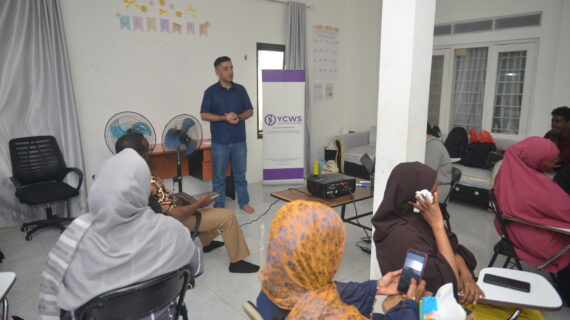
Based on YCWS’s RLO assessment in 2026, there were 22 Refugee-Led Organizations (RLOs) collectively serving more than 1,700 refugees through education, vocational training, sports, advocacy, and community outreach activities. Yet behind these services, many RLOs face significant challenges in sustaining their activities.
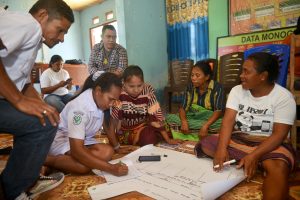
The assessment combined a preliminary organizational survey and Focus Group Discussion attended by 32 RLO representatives from across the the Greater Jakarta area, predominantly representing RLOS based in the Cisarua, Bogor Regency area. The process provided an opportunity for representatives to share their experiences, discuss the challenges they face, and identify the support their organizations need to continue their work.
Findings revealed that the ongoing humanitarian funding crisis has placed RLOs under severe strain: many are providing essential community-based protection functions with no clear mandate or dedicated resources, and while safeguarding infrastructure exists within some organizations, it remains inconsistent and underdeveloped across the sector.
The assessments also underscored that legal exclusion, refugees’ inability to access formal state services and livelihood opportunities, remains the root multiplier of vulnerability in the community. At the same time, the findings reinforced the critical importance of RLOs as spaces that provide refugees with a genuine sense of ownership, agency, and empowerment in the face of systemic exclusion.
Despite these constraints, RLOs have continued to provide valuable services for their communities. Their experience also highlights an important lesson: community-led initiatives require more than commitment and volunteer effort to remain sustainable. The people behind these organizations have already taken on considerable responsibility. To continue their work, they need access to resources, skills, and partnerships that can help sustain and strengthen what they have built.
Through the EMPOWER project, by and PCUSA, YCWS is working with RLOs to strengthen governance, safeguarding, and financial management. The project also supports efforts to formalize their role in community-based protection and strengthen the recognition, tools, and partnerships they need to continue serving their communities.
The experience of RLOs in Cisarua shows what communities can build when people come together to respond to shared needs. Sustaining that work requires more than the dedication of those who lead it. It also requires support that recognizes their contributions, strengthens their capacity, and helps them continue the work they have already begun.