Strengthening Community Resilience Across Indonesia

Strengthening Community Resilience Across Indonesia

Strengthening Community Resilience Across Indonesia,humanitarian response is often measured by what happens during a crisis. But long-term resilience is built long before disasters strike, through preparedness, local leadership, and systems that help communities protect one another.

In the first quarter of 2026, Yayasan Cita Wadah Swadaya (YCWS) continued working alongside communities across Indonesia to strengthen disaster preparedness, support emergency response, and protect vulnerable groups affected by displacement and crisis.

Flood Response in Aceh Utara

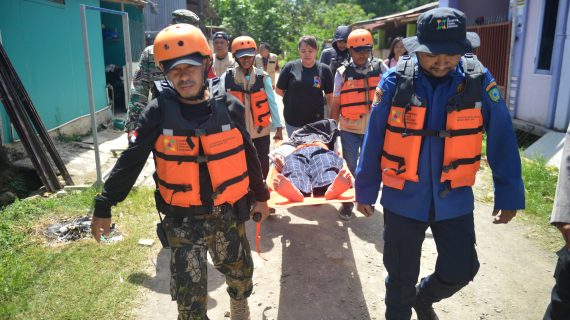
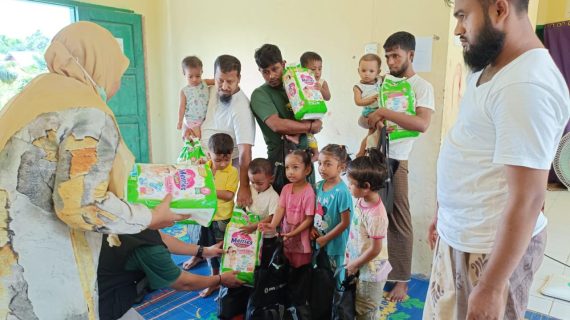
When severe flooding hit Aceh Utara, access to affected areas became one of the immediate challenges. As floodwaters began to recede and roads reopened, YCWS, together with local partner Yayasan Geutanyoe, quickly mobilized emergency assistance to communities in need.

In January 2026, 561 households received clean water and water storage support, reaching 2,054 people across affected villages. The response also prioritized persons with disabilities, whose access to emergency assistance is often limited during emergencies.

Clean water remains one of the most urgent needs after flooding, especially when damaged infrastructure increases health risks and disrupts daily life. Through rapid coordination and local partnership, communities were able to receive support during a critical recovery period.

Building Resilience Before Disasters Happen

Alongside emergency response, YCWS continued strengthening community-based disaster risk reduction through the CLEAR and I-CREATE projects in Makassar and Malaka.

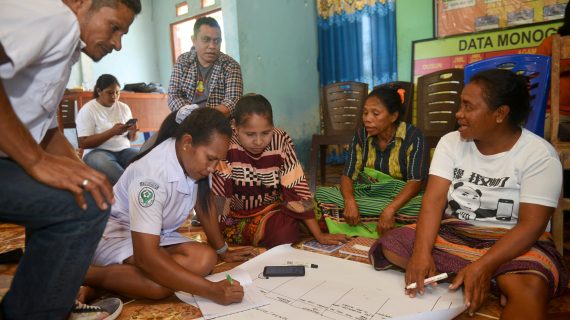
In Makassar, the CLEAR project worked closely with Urban Village Disaster Risk Reduction (UVDRR) teams across four kelurahan. A total of 87 team members participated in strengthening community contingency plans, improving evacuation procedures, and refining early warning systems.

Preparedness activities were designed to be practical and locally relevant. Through small grants and community-led initiatives, neighborhoods developed activities such as urban farming and waste management programs that support resilience in everyday life.

In Malaka, East Nusa Tenggara, the I-CREATE project supported the establishment of community-based flood early warning systems across 13 villages. The systems were developed collaboratively with local governments, religious leaders, and community groups to ensure that risk information could reach all residents, especially vulnerable groups.

YCWS also facilitated technical training in rainfall analysis, landslide monitoring, and QGIS mapping, helping local partners strengthen evidence-based disaster risk reduction and improve local decision-making.

Together, these initiatives reflect a broader approach to resilience. Communities are not only recipients of assistance, but active leaders in preparedness and risk reduction.

Supporting Local Humanitarian Responders in Papua

In Papua, where geography, conflict, and limited infrastructure often complicate humanitarian access, faith-based networks continue to play an important role in community response.

YCWS partnered with the Persekutuan Gereja-Gereja di Indonesia (PGI) to facilitate HONAI training for 20 church-based responders from conflict-affected communities. The training focused on humanitarian coordination, protection principles, and community-based response capacities.

The approach was grounded in a simple understanding: people closest to a crisis are often the first to respond, and they need practical tools and systems to do so safely and effectively.

Refugee Protection Through Community Support

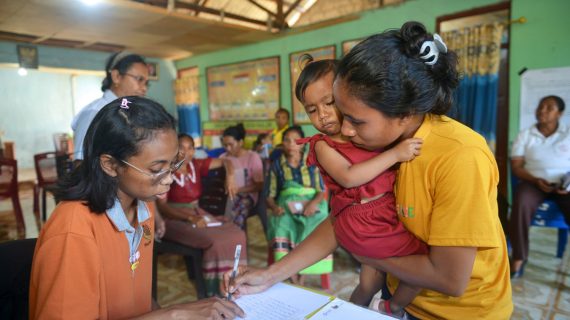
During the first quarter of 2026, 441 refugees and asylum seekers accessed support through YCWS programs, with women and girls representing more than half of those reached.

YCWS facilitated 331 outpatient health con

sultations, case management for 37 gender-based violence and child protection cases, and continued access to antiretroviral medication for seven individuals requiring sustained treatment.

Beyond direct services, YCWS also strengthened refugee-led support systems. Sixty refugees served as interpreters, caregivers, peer mentors, and outreach volunteers within their own communities.

This reflects YCWS’s broader approach to humanitarian work: strengthening the capacity of communities to protect dignity, reduce risks, and build safer futures together.


True Love Comes from Peace of Mind

True Love Comes from Peace of Mind

Have you ever wondered what true love really looks like? It is not found in big promises or beautiful words. True love is tested in the hardest moments — when everything else has been stripped away.

My name is Raha. I am an asylum seeker in Indonesia who sought safety from my homeland.
While awaiting resettlement to a third country, a move I hoped would bring new hope, I married a man who instead brought only pain.
After surviving one abusive marriage in my homeland, I soon became trapped in an even harsher one in a country where I had hoped to find safety for myself and my sons.
I married someone who is more controlling, more violent, and crueller.

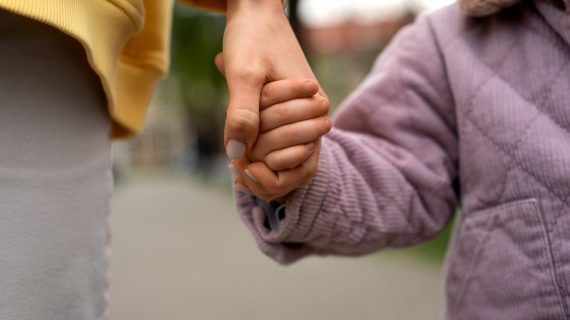
A month ago, I escaped from my abusive husband. My body was still marked by bruises, and my heart carried wounds no one could see. But on September 4, 2025, under the burning Indonesian sun, I held my eldest son’s hand as we walked to pick up his younger brother from school.

On that day, as my eldest waited for his younger brother, who was still in class, I brought him along to help me relocate to a safer place for us.

A safer place that I finally found after searching almost every day, spending nearly the entire day outdoors during the peak of summer, when the sun felt three times hotter than usual.

A safer place, in contrast to our former home, I chose to live in a densely populated area.

A place I’m certain my husband never expected me to settle.

I carried a bag of clothes on my back, a water container in one hand, and a mop in the other.

I asked my son to help me carry his school bag, the one he still hopes to use someday. Since our last relocation, we’ve been searching for a school for him, but as refugees, our opportunities to enrol in an educational facility remain limited.

The day before, I had already moved a stove, a carpet, and two more bags — all by myself, using buses and walking long distances. Each trip was heavy, but it was the only way to protect my children.

I was exhausted. But giving up was never an option. Because my children’s safety must come first. Their education, second.

Even knowing my abuser was still searching for me, I chose to keep moving forward.

That afternoon, as we walked together, my seven-year-old son asked me for a kite. I had no money — not even for food. I smiled and told him, “We will wait a little.” To him, it was just patience. To me, it was protecting him from fear and hunger.

I almost broke then. Tears filled my eyes. But I told myself, “It’s just dust.” And I wiped them away.

Those tears carried questions: Will I survive this? Is this more than I can bear? How long can I keep going? But I also whispered Alhamdulillah. Because I still had my sons. Because I still had hope.

My name, Raha, means peace of mind. Even in hardship, I hold on to that peace. I am a mother whose love is my strength. A woman who rises again and again — not because life is kind, but because my love is fierce.

This is what true love looks like. It is not easy. It is not comfortable. But it is powerful enough to keep us alive.

*Note: The name used in the story is not the original but was carefully chosen to have the same meaning in Arabic. This maintains the authenticity of the narrative while preserving the individual’s confidentiality.

YCWS and UNHCR Strengthen Coordination on Protection of Refugee in Indonesia

YCWS and UNHCR Strengthen Coordination on Protection of Refugee in Indonesia

YCWS and UNHCR Strengthen Coordination on Protection of Refugee in Indonesia

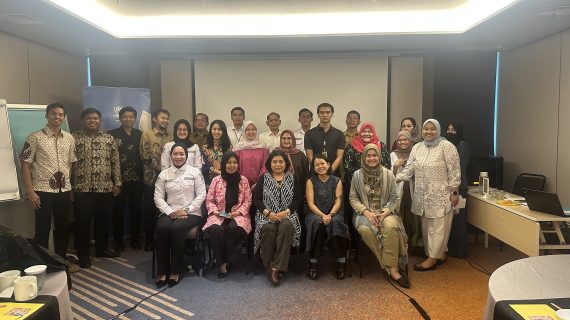
Yayasan Cita Wadah Swadaya, in collaboration with UNHCR, conducted a coordination meeting on the protection of refugee women and girls in Jakarta, Tuesday (9/12/2025). The meeting brought together representatives from the Ministry of Women Empowerment and Child Protection (KemenPPPA), Offices of Women Empowerment and Child Protection (DP3A) and UPTD PPA from the Greater Jakarta area, Komnas Perempuan, the Women and Children Protection Unit (UPPA) of Bogor Regency Police, as well as civil society organizations. 

During the meeting, UNHCR highlighted several key barriers in addressing gender-based violence (GBV) and child protection cases within refugee communities, including: 

  1. Limited and inconsistent involvement of national and sub-national governments, child protection actors, and GBV service providers across different locations; 
  1. The need for clear guidance from KemenPPPA to technical units (DP3A/UPTD PPA) to enable them to handle child protection and/or GBV cases involving refugees. Currently, there is confusion among technical units, with the assumption that such cases should be handled directly by KemenPPPA; and 
  1. An increasing number of refugees in need of legal aid, case accompaniment, cash assistance, and access to safe houses, at a time when humanitarian funding is declining, resulting in reduced support capacity. 

The objectives of the coordination meeting were to: 

  • Strengthen coordination and develop a shared understanding of mechanisms for handling child protection and GBV cases involving refugees in Indonesia; 
  • Identify challenges and service gaps, and formulate next steps to improve access to protection services, including the integration of refugees into the national protection system; and 
  • Encourage a more active and structured role of the government in managing child protection and GBV cases involving refugees, while strengthening the technical capacity of government institutions to deliver comprehensive responses. 

KemenPPPA acknowledged that Indonesia has not ratified the 1951 Refugee Convention and does not yet have a refugee status determination system. Nevertheless, the Government of Indonesia remains committed to providing protection and support to refugees, as reflected in Presidential Regulation No. 125 of 2016, as well as existing national legal frameworks, including the Human Rights Law, the Child Protection Law, and the Law on the Crime of Sexual Violence (TPKS Law). 

KemenPPPA emphasized the importance of cross-ministerial obligations and continued coordination with relevant stakeholders to ensure that children in need of special protection are adequately supported. Women and children were highlighted as the most vulnerable groups in situations of forced displacement and at heightened risk of violence, exploitation, and abuse. 

The fulfilment of refugee children’s rights requires a multisectoral approach involving civil society organizations, as well as central and local governments, to ensure that their basic rights are upheld, that they are protected from violence and exploitation, and that they can access adequate services. These efforts should be aligned with the UN Convention on the Rights of the Child (CRC), ensuring that the best interests of the child remain a primary consideration in all services and interventions for refugee children. 

From Legacy to Local Leadership

From Legacy to Local Leadership

In August 2024, after more than six decades of humanitarian work in Indonesia, Church World Service’s presence transformed into something new: Yayasan Cita Wadah Swadaya (YCWS), an Indonesian, faith-based foundation built on inherited trust and long-standing partnerships.

At YCWS, we did not start from zero. As an Indonesian foundation, we stand on more than sixty years of credibility earned alongside refugees, communities hit by disasters, and villages on the frontline of the climate crisis. That inheritance is now our mandate: we are here to ensure that humanitarian work in Indonesia is led, owned, and sustained by Indonesians themselves.

As a faith-based foundation, we express our faith through action: standing with people in their hardest moments and protecting their dignity. From this commitment flow three interconnected areas of work:

  • Refugee Protection
  • Disaster Preparedness & Response
  • Climate Resilience

In our first year as YCWS, we walked alongside more than 1,350 people across three provinces. At the centre of this work is refugee protection. Our teams provided 430+ health consultations – including HIV services and mental health support – and supported 233 refugees and asylum seekers with safe accommodation and ongoing case management. We also delivered cash assistance to 785 people, helping families cover urgent needs with dignity. For nearly 100 women and girls at risk, this support meant protection, specialised counselling, and concrete pathways toward greater safety and independence.

Beyond refugee protection, we worked with communities not only to respond to crises, but to prepare for them. In Makassar, community-led teams coordinated flood evacuations, ran public kitchens, and worked side by side with city authorities during emergencies. In East Nusa Tenggara, we launched I-CREATE, a three-year initiative to strengthen early warning systems in 13 flood-prone villages. Along the way, 452 residents joined climate awareness sessions and 102 village leaders helped shape local resilience action plans that they themselves will drive forward.

Humanitarian action is changing it must localise and return real power to communities. YCWS is where a long-standing legacy becomes a local mandate.

Small Homes, Big Safety: How Community Care Helps Refugee Children Rebuild in Indonesia

Small Homes, Big Safety: How Community Care Helps Refugee Children Rebuild in Indonesia

Across Indonesia’s vast chain of islands, more than 11,700 refugees and asylum seekers are trying to rebuild their lives far from home. Nearly one-third of them are children. Some made the journey alone, while others were separated from their families along the way. Many arrive exhausted, carrying experiences far too heavy for someone their age.

In a country that isn’t part of the 1951 Refugee Convention, their safety depends on a mix of local laws, international support, and organizations that believe every child deserves protection.

At Yayasan Cita Wadah Swadaya (YCWS), that belief guides everything we do. YCWS supports unaccompanied and separated children through the Supported Independent Living Care Arrangement (SILCA). It’s a quietly transformative model, and built not around institutions, but around people.

Through SILCA, children live with trained guardians or foster parents in simple rented homes across Jakarta, South Tangerang, and Bogor. These aren’t large shelters or group centres. They’re small, everyday homes where a child can begin to feel a sense of normal life again. Weekly safety visits, case management, access to school, vocational training, healthcare, and psychosocial support from the program’s foundation.

But often, it’s the small human moments that matter most: a guardian helping with homework in a language neither fully shares, a foster parent showing how to shop at the local market, a case worker listening when an old memory suddenly surfaces. Indonesia faces real protection challenges.

Meanwhile, more than 400 unaccompanied or separated children are registered with UNHCR, and many more are vulnerable due to displacement, long waiting periods, and the emotional toll of uncertainty. Refugees cannot legally work, which strains families and affects children’s stability.

Access to national education remains limited. Only 769 refugee children attend accredited schools out of thousands who qualify. In Aceh and North Sumatra, Rohingya arrivals in recent years have encountered community tension, overcrowded shelters, and rising protection risks.

Amid these challenges, SILCA offers a small but meaningful path to dignity. It helps children grow within a community instead of being pushed to its edges. It allows them to slowly recover the rhythms of childhood—learning, socializing, making mistakes, trying again.

And it strengthens the community around them by involving Indonesian neighbors, refugee volunteers, and local authorities in their daily protection. Rebuilding childhood after displacement is never simple. But each time a child begins to feel truly safe again, something changes. They start to imagine their future.

They begin to dream in ways that once felt impossible. At those moments, YCWS is reminded why this work matters, and why community-based care remains one of the strongest tools we have.

YCWS and Civil Society Network Call for Stronger Protection for Refugees

YCWS and Civil Society Network Call for Stronger Protection for Refugees


The recent sinking of a boat carrying 70 Rohingya refugees near Malaysian waters is yet another reminder of how the region continues to fall short in protecting people fleeing humanitarian crises. Yayasan Cita Wadah Swadaya (YCWS), together with the Civil Society Network on Refugee and Asylum Seeker Issues in Indonesia, expresses deep concern and sympathy for the victims and calls for shared responsibility to strengthen refugee protection.

According to reports, the boat sank near the maritime border between Malaysia and Thailand shortly after departing from Rakhine State, Myanmar. At least 21 people have been confirmed dead, 13 survivors have been rescued, and dozens remain missing. Search and rescue teams continue to comb a wide area around Ko Tarutao, north of Langkawi Island, Malaysia.

Authorities believe that this incident is part of a larger movement involving as many as 300 people traveling on multiple boats. The tragedy underscores the ongoing humanitarian crisis faced by Rohingya communities—and how dangerous sea routes have increasingly become their only available option.

This tragedy is far from isolated. Over the past year, more than 5,300 Rohingya refugees have attempted to leave Bangladesh and Myanmar by sea, with at least 600 reported missing or dead. Many of them are women and children, who remain the most exposed to violence, exploitation, and severe neglect during these journeys.

Indonesia is no stranger to such heartbreak. In March 2024, a boat capsized off the coast of West Aceh, killing 67 people, including 27 children. According to UNHCR, more than 1,000 Rohingya refugees are believed to have died or gone missing at sea between 2023 and 2024. Survivors often recount harrowing experiences of abuse, exploitation, and severe deprivation while at sea. Yet many continue their journeys—driven by fear, uncertainty, and the lack of any safe alternatives.

Many Rohingya families take these risks because they simply have no other choice. Conflict in Myanmar remains unresolved, refugee camps in Bangladesh are overcrowded and increasingly restrictive, and safe pathways are nearly non-existent. For many, the dangerous sea becomes a desperate last resort.

The civil society network urges governments in the region to share responsibility. Countries must strengthen cooperation, ensure non-discriminatory search-and-rescue operations, and establish safe, legal, and dignified pathways for those seeking protection. At the same time, resolving the political crisis in Myanmar is essential and cannot be delayed.

Without collective action, refugees will continue to risk their lives on perilous sea journeys—seeking nothing more than safety and hope.

Civil Society Network on Refugee and Asylum Seeker Issues in Indonesia:

  1. Perkumpulan Suaka untuk Perlindungan Hak Pengungsi (SUAKA)
  2. Asia Justice and Rights (AJAR)
  3. Jesuit Refugee Service Indonesia (JRS Indonesia)
  4. MER-C (Medical Emergency Rescue Committee)
  5. Yayasan Kesehatan Perempuan (YKP)
  6. Yayasan Kemanusiaan Madani Indonesia (YKMI)
  7. Yayasan Cita Wadah Swadaya (YCWS)
  8. Dompet Dhuafa
  9. Yayasan Geutanyoe
  10. KontraS Aceh
  11. Human Rights Working Group (HRWG)

Get in Touch!

Social Media

Join Us

Contact Us

© Copyright Yayasan Cita Wadah Swadaya. All Right Reserved