From Legacy to Local Leadership

From Legacy to Local Leadership

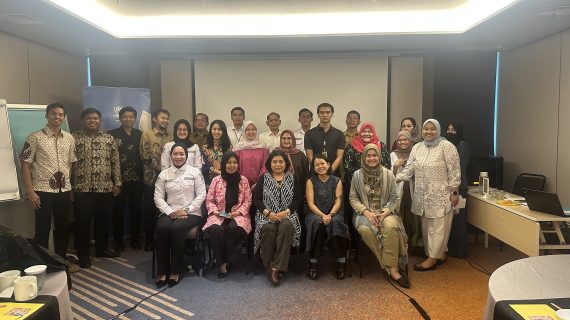
In August 2024, after more than six decades of humanitarian work in Indonesia, Church World Service’s presence transformed into something new: Yayasan Cita Wadah Swadaya (YCWS), an Indonesian, faith-based foundation built on inherited trust and long-standing partnerships.

At YCWS, we did not start from zero. As an Indonesian foundation, we stand on more than sixty years of credibility earned alongside refugees, communities hit by disasters, and villages on the frontline of the climate crisis. That inheritance is now our mandate: we are here to ensure that humanitarian work in Indonesia is led, owned, and sustained by Indonesians themselves.

As a faith-based foundation, we express our faith through action: standing with people in their hardest moments and protecting their dignity. From this commitment flow three interconnected areas of work:

  • Refugee Protection
  • Disaster Preparedness & Response
  • Climate Resilience

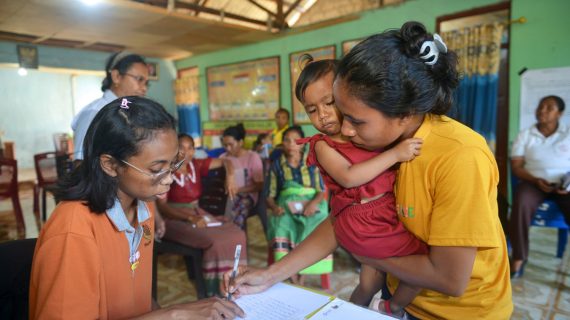
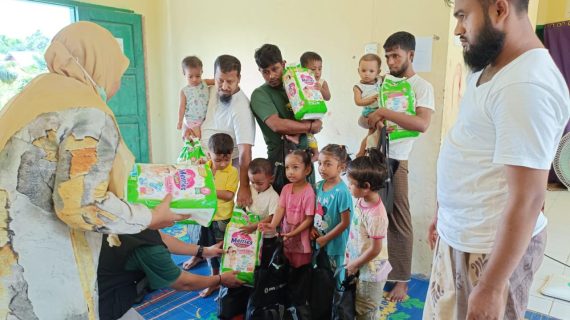
In our first year as YCWS, we walked alongside more than 1,350 people across three provinces. At the centre of this work is refugee protection. Our teams provided 430+ health consultations – including HIV services and mental health support – and supported 233 refugees and asylum seekers with safe accommodation and ongoing case management. We also delivered cash assistance to 785 people, helping families cover urgent needs with dignity. For nearly 100 women and girls at risk, this support meant protection, specialised counselling, and concrete pathways toward greater safety and independence.

Beyond refugee protection, we worked with communities not only to respond to crises, but to prepare for them. In Makassar, community-led teams coordinated flood evacuations, ran public kitchens, and worked side by side with city authorities during emergencies. In East Nusa Tenggara, we launched I-CREATE, a three-year initiative to strengthen early warning systems in 13 flood-prone villages. Along the way, 452 residents joined climate awareness sessions and 102 village leaders helped shape local resilience action plans that they themselves will drive forward.

Humanitarian action is changing it must localise and return real power to communities. YCWS is where a long-standing legacy becomes a local mandate.

Small Homes, Big Safety: How Community Care Helps Refugee Children Rebuild in Indonesia

Small Homes, Big Safety: How Community Care Helps Refugee Children Rebuild in Indonesia

Across Indonesia’s vast chain of islands, more than 11,700 refugees and asylum seekers are trying to rebuild their lives far from home. Nearly one-third of them are children. Some made the journey alone, while others were separated from their families along the way. Many arrive exhausted, carrying experiences far too heavy for someone their age.

In a country that isn’t part of the 1951 Refugee Convention, their safety depends on a mix of local laws, international support, and organizations that believe every child deserves protection.

At Yayasan Cita Wadah Swadaya (YCWS), that belief guides everything we do. YCWS supports unaccompanied and separated children through the Supported Independent Living Care Arrangement (SILCA). It’s a quietly transformative model, and built not around institutions, but around people.

Through SILCA, children live with trained guardians or foster parents in simple rented homes across Jakarta, South Tangerang, and Bogor. These aren’t large shelters or group centres. They’re small, everyday homes where a child can begin to feel a sense of normal life again. Weekly safety visits, case management, access to school, vocational training, healthcare, and psychosocial support from the program’s foundation.

But often, it’s the small human moments that matter most: a guardian helping with homework in a language neither fully shares, a foster parent showing how to shop at the local market, a case worker listening when an old memory suddenly surfaces. Indonesia faces real protection challenges.

Meanwhile, more than 400 unaccompanied or separated children are registered with UNHCR, and many more are vulnerable due to displacement, long waiting periods, and the emotional toll of uncertainty. Refugees cannot legally work, which strains families and affects children’s stability.

Access to national education remains limited. Only 769 refugee children attend accredited schools out of thousands who qualify. In Aceh and North Sumatra, Rohingya arrivals in recent years have encountered community tension, overcrowded shelters, and rising protection risks.

Amid these challenges, SILCA offers a small but meaningful path to dignity. It helps children grow within a community instead of being pushed to its edges. It allows them to slowly recover the rhythms of childhood—learning, socializing, making mistakes, trying again.

And it strengthens the community around them by involving Indonesian neighbors, refugee volunteers, and local authorities in their daily protection. Rebuilding childhood after displacement is never simple. But each time a child begins to feel truly safe again, something changes. They start to imagine their future.

They begin to dream in ways that once felt impossible. At those moments, YCWS is reminded why this work matters, and why community-based care remains one of the strongest tools we have.

YCWS and Civil Society Network Call for Stronger Protection for Refugees

YCWS and Civil Society Network Call for Stronger Protection for Refugees


The recent sinking of a boat carrying 70 Rohingya refugees near Malaysian waters is yet another reminder of how the region continues to fall short in protecting people fleeing humanitarian crises. Yayasan Cita Wadah Swadaya (YCWS), together with the Civil Society Network on Refugee and Asylum Seeker Issues in Indonesia, expresses deep concern and sympathy for the victims and calls for shared responsibility to strengthen refugee protection.

According to reports, the boat sank near the maritime border between Malaysia and Thailand shortly after departing from Rakhine State, Myanmar. At least 21 people have been confirmed dead, 13 survivors have been rescued, and dozens remain missing. Search and rescue teams continue to comb a wide area around Ko Tarutao, north of Langkawi Island, Malaysia.

Authorities believe that this incident is part of a larger movement involving as many as 300 people traveling on multiple boats. The tragedy underscores the ongoing humanitarian crisis faced by Rohingya communities—and how dangerous sea routes have increasingly become their only available option.

This tragedy is far from isolated. Over the past year, more than 5,300 Rohingya refugees have attempted to leave Bangladesh and Myanmar by sea, with at least 600 reported missing or dead. Many of them are women and children, who remain the most exposed to violence, exploitation, and severe neglect during these journeys.

Indonesia is no stranger to such heartbreak. In March 2024, a boat capsized off the coast of West Aceh, killing 67 people, including 27 children. According to UNHCR, more than 1,000 Rohingya refugees are believed to have died or gone missing at sea between 2023 and 2024. Survivors often recount harrowing experiences of abuse, exploitation, and severe deprivation while at sea. Yet many continue their journeys—driven by fear, uncertainty, and the lack of any safe alternatives.

Many Rohingya families take these risks because they simply have no other choice. Conflict in Myanmar remains unresolved, refugee camps in Bangladesh are overcrowded and increasingly restrictive, and safe pathways are nearly non-existent. For many, the dangerous sea becomes a desperate last resort.

The civil society network urges governments in the region to share responsibility. Countries must strengthen cooperation, ensure non-discriminatory search-and-rescue operations, and establish safe, legal, and dignified pathways for those seeking protection. At the same time, resolving the political crisis in Myanmar is essential and cannot be delayed.

Without collective action, refugees will continue to risk their lives on perilous sea journeys—seeking nothing more than safety and hope.

Civil Society Network on Refugee and Asylum Seeker Issues in Indonesia:

  1. Perkumpulan Suaka untuk Perlindungan Hak Pengungsi (SUAKA)
  2. Asia Justice and Rights (AJAR)
  3. Jesuit Refugee Service Indonesia (JRS Indonesia)
  4. MER-C (Medical Emergency Rescue Committee)
  5. Yayasan Kesehatan Perempuan (YKP)
  6. Yayasan Kemanusiaan Madani Indonesia (YKMI)
  7. Yayasan Cita Wadah Swadaya (YCWS)
  8. Dompet Dhuafa
  9. Yayasan Geutanyoe
  10. KontraS Aceh
  11. Human Rights Working Group (HRWG)

Get in Touch!

Social Media

Join Us

Contact Us

© Copyright Yayasan Cita Wadah Swadaya. All Right Reserved